Table of Contents
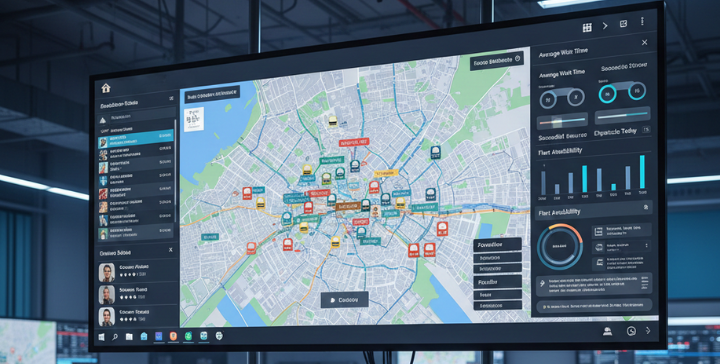
US taxi fleets under pressure
Across the United States, traditional taxi operators are facing intense competition from ride‑sharing giants that built their businesses on seamless apps and data‑driven dispatch. Day‑to‑day operations have also become more complex, with rising fuel costs, urban congestion, evolving regulations, and passenger expectations for real‑time tracking and digital payments. To stay competitive and protect margins, many fleets are moving away from manual phone dispatch and legacy systems and investing in modern taxi dispatch software instead.
US taxi fleets are increasingly prioritising operational transparency and real-time control, making GPS Tracking in taxi systems a critical component of modern dispatch software. By integrating advanced GPS tracking, Mobility Infotech enables fleet operators to monitor vehicle locations accurately, optimise routing, reduce passenger wait times, and enhance driver accountability. This technology also supports faster dispatch decisions, improved fuel efficiency, and higher customer satisfaction by providing precise ETAs and live trip visibility. As competition intensifies across urban mobility markets, GPS-driven insights are helping US taxi fleets deliver more reliable, data-driven transportation services.
Why taxi dispatch software is now a necessity
Taxi dispatch software is no longer a nice‑to‑have IT upgrade; it has become the backbone of modern fleet management for US operators. These platforms centralise bookings from call centres, apps, and web channels, then automatically assign trips to the nearest available driver using GPS data and configurable business rules. The result is lower idle time, faster response, and better utilisation of vehicles, which directly improves profitability for fleets of all sizes.
From the passenger’s perspective, the same technology delivers the features they now expect by default: instant booking, ETA visibility, real‑time tracking, and digital receipts. When US taxi fleets implement reliable taxi dispatch software, customer experience improves across the board, from shorter wait times and clearer pricing to a greater sense of safety and control over each trip.
US taxi fleets modernise with taxi dispatch software
Across many American cities, taxi companies are rapidly adopting digital dispatch systems to modernise operations and match the convenience of app‑based ride‑hailing. This modernisation is reshaping how fleets work end‑to‑end, from how trips are booked and allocated to how billing, reporting, and compliance are handled behind the scenes. As a result, operators can respond more quickly to demand spikes, manage resources more intelligently, and present a more polished, app‑like experience to riders.
From regulatory pressure to market opportunity
As more cities revisit ride-hailing regulations and seek a level playing field between platforms and licensed taxis, US fleets see an opportunity to regain market share. By combining long-standing strengths, such as local knowledge, licensing, and safety standards, with modern taxi dispatch software, operators can compete on quality and reliability instead of relying solely on price. This repositioning allows fleets to market themselves as regulated, professional services that still deliver the speed and convenience digital‑first passengers expect.
From reactive dispatch to proactive operations
One of the most significant shifts for US taxi fleets is the move from reactive to proactive operations. With real‑time dashboards and historical analytics, managers can anticipate peak periods, stage vehicles in likely demand hotspots, and balance work across drivers to reduce downtime and empty miles. This data‑driven approach helps fleets increase trips per vehicle while maintaining service quality, even during rush hours, large events, or adverse weather conditions.
Transforming workforce and customer relationships
Digital dispatch systems are also changing how US fleets manage drivers and engage with customers. Access to clear performance data makes it easier to design transparent incentive schemes, recognise high‑performing drivers, and identify where additional training is needed, which supports retention and service consistency. On the customer side, app‑based booking, ride history, and better communication channels help fleets build direct relationships with passengers and encourage repeat usage without relying on third‑party intermediaries.
Cloud-based deployment lowers adoption barriers
Modern taxi dispatch platforms are typically delivered as scalable, cloud‑hosted services, which have lowered adoption barriers for US fleets. Operators no longer need to invest heavily in on‑premise hardware or large IT teams, making advanced capabilities accessible to small and mid‑sized companies as well as major city fleets. Many businesses start with core booking and dispatch functions, then gradually expand into additional use cases such as airport transfers, corporate accounts, and non‑emergency medical transport as their operations and revenue grow.