Table of Contents
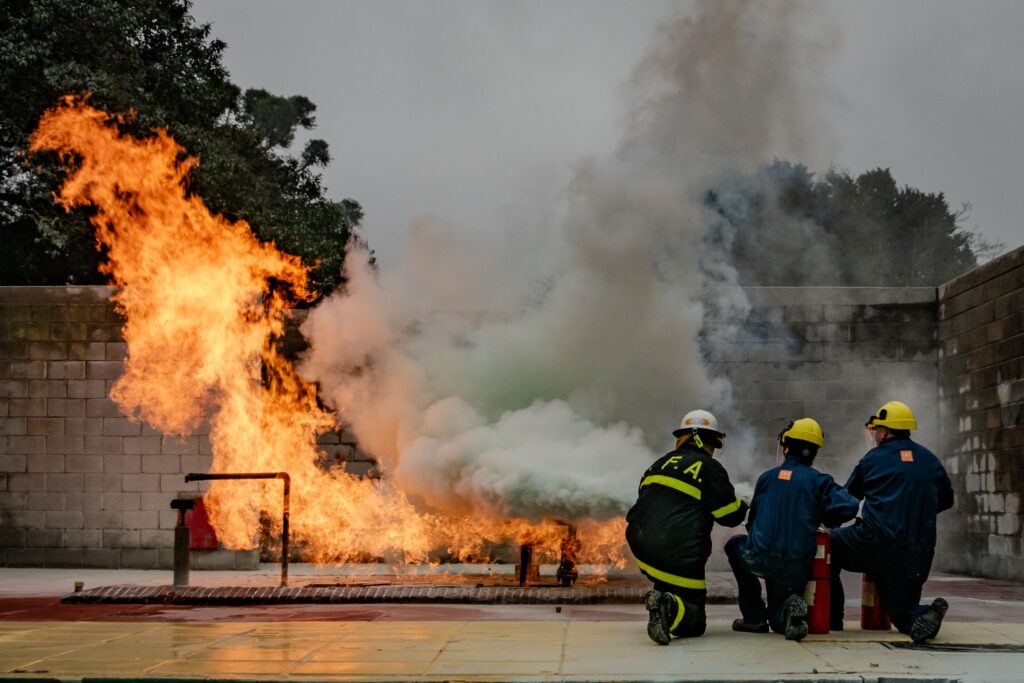
Nitrogen is used in two fundamentally different ways in fire protection: to extinguish a fire after it has started (Fire prevention), and to prevent a fire from starting at all (nitrogen fire suppression). Both approaches use the same principle, reducing oxygen concentration below the level combustion requires, but they operate differently, suit different environments and carry different implications for system design, nitrogen consumption and occupant safety. Understanding the distinction is the starting point for specifying the right fire protection strategy for a facility.
What Is Nitrogen Fire Suppression?
Nitrogen fire suppression, also referred to as total flooding, is a reactive approach. The nitrogen supply is held in reserve and released rapidly when a fire is detected. Sensors identify smoke or heat, trigger an evacuation alarm, allow a brief delay for occupants to exit and then discharge nitrogen into the protected enclosure. Oxygen drops from the normal 21% to between 12% and 15%, below the threshold at which most materials can sustain combustion. The fire is extinguished within seconds, without water, without chemical residue and without damage to equipment or infrastructure inside the protected space.
Suppression mode consumes nitrogen only during a discharge event. Between events, the system holds its supply in reserve and requires no ongoing nitrogen consumption beyond periodic system testing and verification.
What Is Nitrogen Fire Prevention?
Nitrogen fire prevention, also referred to as oxygen reduction or continuous inerting, is a proactive approach. Instead of waiting for a fire to start and then responding, the system introduces nitrogen into the protected space continuously to maintain oxygen at a permanently reduced level, typically around 15%. At this concentration, the conditions required for ignition are never present. A fire cannot start because the oxygen it needs is not available.
Prevention mode requires a continuous nitrogen supply that compensates for the natural air infiltration rate of the protected space. The tighter the enclosure, the less nitrogen is consumed to maintain the target oxygen level. The system monitors oxygen concentration continuously and adjusts nitrogen flow to hold the target level within a defined range.
The Core Difference: Reactive versus Proactive Protection
The fundamental difference between the two approaches is timing. Suppression responds to a fire that has already started. Prevention ensures a fire cannot start in the first place. This distinction has practical consequences for the level of protection each approach provides.
A suppression system depends on detection speed and response time. Between the moment of ignition and the moment nitrogen reaches suppression concentration, a fire is burning and producing heat, smoke and potentially toxic gases. In a space containing sensitive equipment, valuable assets or irreplaceable materials, even a few seconds of active fire causes damage that suppression cannot undo. Prevention eliminates this window entirely by maintaining conditions in which ignition is impossible regardless of detection speed or response time.
Which Environments Suit Suppression and Which Suit Prevention
Suppression mode is appropriate for spaces where the risk of fire is relatively low, where assets can tolerate brief exposure to smoke before suppression activates and where the nitrogen consumption of continuous prevention is not justified by the risk profile. Storage rooms, server rooms with moderate criticality and general industrial spaces with standard fire risks are typical suppression candidates.
Prevention mode is appropriate for spaces where the value of the assets, the irreplaceability of the contents or the consequences of any fire event justify continuous protection. Data centres running mission-critical infrastructure, automated warehouses where a fire would cause total inventory loss, cold storage facilities where conventional sprinklers cannot be used and museums or archives housing irreplaceable collections are all environments where prevention mode provides a meaningfully higher standard of protection than suppression.
Can Both Approaches Be Combined?
Yes. In some facilities, different zones require different levels of protection. A data centre may use continuous oxygen reduction in the server hall and suppression mode in adjacent plant rooms or cable risings. A warehouse complex may use prevention in the high-bay automated storage area and suppression in the loading and dispatch areas. A single nitrogen generation system can supply both modes simultaneously, with the control system managing nitrogen distribution and oxygen monitoring across all protected zones independently.
How to Choose the Right Approach for Your Facility
The choice between suppression and prevention comes down to three questions. First, what is the consequence of any fire event in the protected space, however brief? If even a few seconds of active fire causes unacceptable damage or loss, prevention is the appropriate approach. Second, is the protected space regularly occupied? Prevention mode at 15% oxygen is compatible with human presence for normal working activity, but the occupancy profile of the space should be assessed by a qualified fire protection engineer. Third, what is the air tightness of the enclosure? A space with significant air infiltration consumes more nitrogen in prevention mode, and improving enclosure tightness during construction or fit-out reduces the long-term operating cost of a prevention system. Where the answers to these questions point in different directions, a qualified engineer can model both approaches and present a clear comparison of protection level, nitrogen consumption and total cost for the specific facility.