Table of Contents
Firefighters are constantly facing danger while on the job. From smoke inhalation to exposure to harmful chemicals, occupational hazards are part and parcel of the profession.
Safety has always been a concern. Now even more so. The AFFF firefighting foam lawsuits dominate locker room conversations among those exposed to the toxic firefighting foams used to put out fires.
Aqueous Film Forming Foam (AFFF) is a fire-retardant substance used by firefighters and the military to control highly-flammable fires. Per- and polyfluoroalkyl substances (PFAS) are the cancer-causing toxic chemicals found in AFF firefighting foam.
Called “forever chemicals,” PFAS chemical exposure was linked to higher rates of testicular cancer, thyroid cancer and adverse health effects among firefighters.
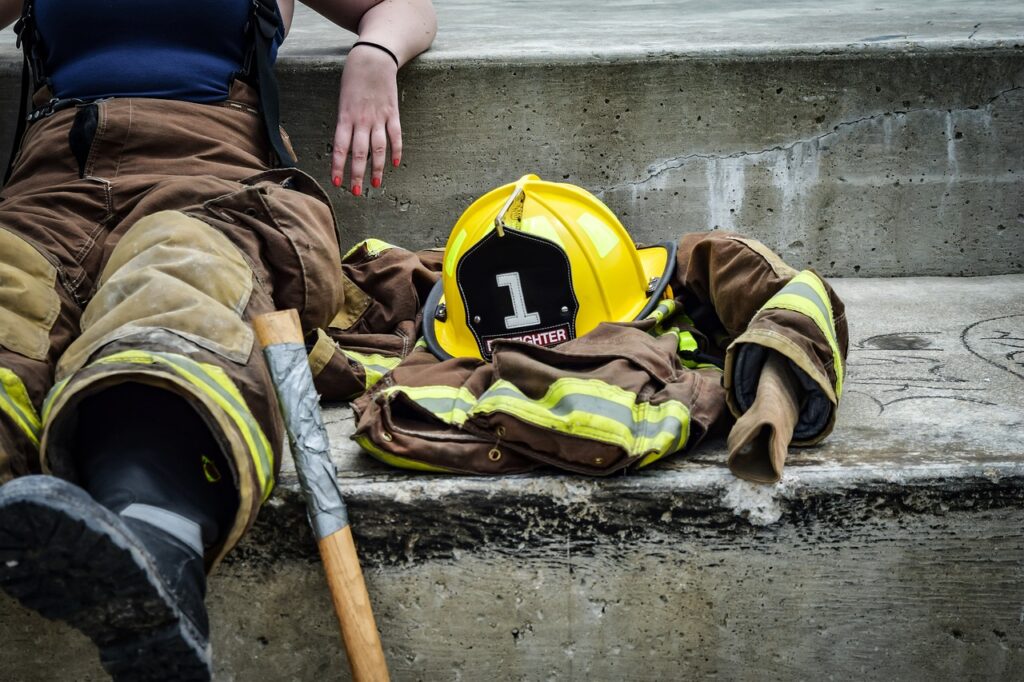
Image source: https://cdn.pixabay.com/photo/2016/07/06/23/23/career-1501615_1280.jpg
AFFF Firefighting Foam Lawsuit as it Stands Now
Firefighting foam manufacturers 3M and Dupont are the main defendants in the AFFF firefighting lawsuit.
And it’s not only firefighters flexing their legal arms. Civilians exposed to PFAS who developed cancer and other health issues have joined the fight.
Although no settlement figures have been agreed on in the AFFF litigation, firefighting foam attorneys predict AFFF lawsuit settlement amounts to be between $40,000 and $300,000.
Perhaps the light at the end of the dark tunnel could be a recent ruling. A court rewarded more than 300 cities in the U.S. with a $10.3 billion settlement from 3M and DuPont for PFAS contamination.
In another case, Connecticut firefighters sued firefighting foam manufacturers in a class action suit. They claimed their protective gear was contaminated by toxic PFAS “forever chemicals” linked to cancer.
In New York, a potential AFFF class action lawsuit was filed by military service members, says TorHoerman Law.
The main focus of the lawsuits is that manufacturers knew of the health risks related to PFAS exposure. Yet, they continue to produce AFFF and are liable for the diseases and illnesses caused.
If anything, the AFFF lawsuit has highlighted that firefighter safety is of paramount importance. With the aid of technology, tragedies such as PFAS exposure should not happen again.
Helmet-Mounted Device
Homeland Security has started rolling out a helmet-mounted indoor visualization and navigation device. The gadget allows first responders to see through black smoke.
Developed by Texas startup Qwake Technologies, C-THRU could be valuable in protecting firefighters.
ABC News reported that the emerging technology helps orientate first responders with navigation guidance for backtracking. If a firefighter does get lost during a fire, they can activate an emergency signal, alerting others to their location.
AI to the Rescue
Joint research published by the National Institute of Standards and Technology, the University of Rochester, and Google found that 40% of on-duty deaths can be attributed to sudden cardiac arrest.
They developed AI software that establishes when a firefighter is about to experience a potentially fatal cardiac event.
Their machine-learning model, called H2M, correctly identified abnormal EKG samples with almost 97% accuracy. Plans include the model’s use in portable heart monitors that firefighters could wear.
Enhanced Breathing Apparatus
German medical technology company Dräger introduced a breathing apparatus specifically for firefighters.
The type 4 composite cylinders are enhanced with graphene nanotubes to minimize weight. Dräger claims the apparatus is 75% lighter than its steel counterparts, and 30% lighter than aluminum alternatives.
Decreasing fatigue and increasing agility, Innovation in Textiles reported that marine firefighters and mine rescue teams would be better equipped to go longer durations of air consumption.
Drone Technology
In recent years, drones have become reliable helpers in search and rescue operations. Thanks to their long-range control systems and portable designs, drones are the next line of safety defense for firefighters.
U.K. researcher Gary Cutts told The Big Red Guide that the autonomous capabilities of drones make them perfectly suited for examining harsh landscapes and unsafe environments.
Having an eye in the sky can provide first responders with real-time data such as thermal image scanning. This allows them to deploy tactical units timeously.
MSA Safety is at the forefront of innovative advancements in firefighter safety. They provide firefighting technology in the form of FireGrid and Edge Detection enhanced thermal imaging.
Another company heavily invested in drone technology is Howe & Howe Technologies. Their Thermite RS1 is America’s first firefighting robot. The model evolved into the Thermite EV2. The electric-powered robot can move further into dangerous, high-temperature environments compared to gas-powered engines.
Experts believe the future of firefighting safety will encompass automation, artificial intelligence, and tools to protect civilians and firefighters.
In light of the firefighting foam cancer lawsuits, protecting firefighters should be a priority and not an afterthought.