Table of Contents

The customs clearance process has traditionally been one of the most documentation-heavy, rule-intensive, and time-consuming aspects of international trade. The combination of complex regulations, multi-document requirements, and the sheer volume of classification and compliance decisions involved in high-frequency shipping has made customs a bottleneck in global supply chains.
AI is changing that. And the professional customs brokers who are integrating AI into their operations are achieving clearance speeds and accuracy levels that weren’t previously possible.
The Traditional Bottlenecks AI Addresses
To understand the impact of AI on customs brokerage, it’s useful to understand where the time and error risk in traditional customs processes are concentrated.
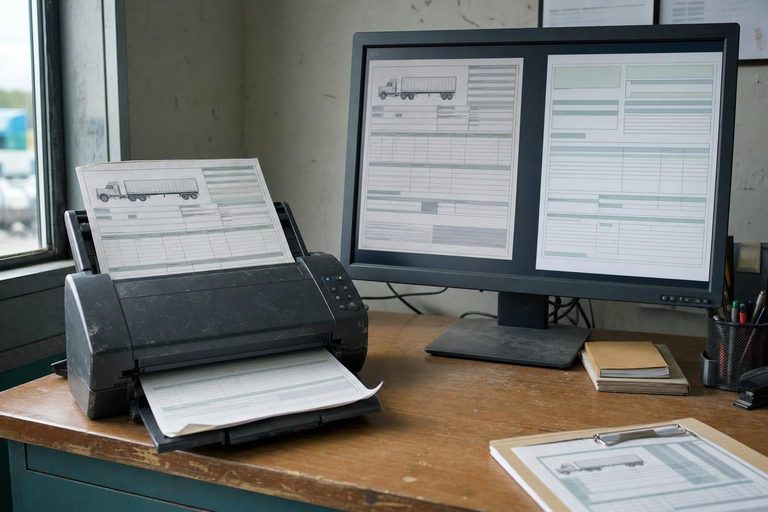
Document processing: A single commercial shipment may require a commercial invoice, packing list, certificate of origin, bill of lading, and in some cases licences, permits, and specialist certifications. Extracting the relevant data from each document, verifying its completeness and accuracy, and entering it into the customs declaration system was largely manual. Every step was a potential source of error and a consumer of processing time.
HS code classification: Determining the correct Harmonised System tariff code for a product requires applying complex classification rules to product descriptions that are often incomplete or inconsistently described by shippers. Misclassification results in incorrect duty calculations, compliance failures, and in some cases audit exposure. Human classifiers are accurate but slow relative to the volume of shipments requiring classification.
Compliance checking: Every shipment must be screened against denied party lists, sanctions regimes, and country-specific restrictions. The frequency with which these lists update, combined with the volume of shipments requiring screening, makes manual compliance checking a significant operational burden.
Pre-clearance analysis: Identifying which shipments are likely to be selected for examination by customs authorities, and preparing the additional documentation and responses those examinations require, was reactive and largely manual.
How AI Is Changing Each of These Functions
Intelligent document processing: AI-powered document processing extracts data from shipping documents regardless of format, layout, or language, verifies it against required fields, identifies discrepancies, and populates declaration systems automatically. Processing times that took minutes per shipment manually are reduced to seconds with near-identical accuracy rates for standard documents and flagging of exceptions for human review.
AI-assisted classification: Machine learning models trained on millions of historical classification decisions, combined with product description analysis, provide accurate HS code suggestions with confidence scores. High-confidence classifications proceed automatically. Lower-confidence classifications are flagged for human review by a specialist. This combination maintains accuracy while dramatically increasing throughput.
Automated compliance screening: AI-powered screening tools check every party in a transaction against current denied party lists and sanctions regimes in real time, with immediate flagging of matches or potential matches for human review. This provides continuous compliance coverage at volumes that manual screening couldn’t approach.
Predictive examination intelligence: Analysing historical examination patterns, shipment characteristics, and risk indicators allows AI systems to identify shipments with elevated examination risk and prepare proactive documentation and response packages, reducing the delay that examination events cause.
For businesses choosing which professional customs brokers to work with as they scale their international trade operations, the technology infrastructure the broker operates is increasingly a meaningful differentiator.
Livingston International has invested in AI-powered trade technology that accelerates clearance timelines and improves compliance accuracy across high-volume shipping operations, representing the direction that the customs brokerage industry is moving.
What AI-Enhanced Brokerage Means for Importers and Exporters
The business impact of AI-enhanced customs brokerage is felt in several specific dimensions.
Faster clearance: Reduced processing time per declaration translates directly into faster clearance, which means inventory arrives sooner, supply chains operate more reliably, and the capital tied up in transit goods is freed faster.
Lower error rates: AI-assisted classification and document processing reduces human error rates in high-volume, repetitive tasks, which means fewer corrections, fewer holds, and fewer compliance incidents.
Real-time visibility: Modern customs brokerage platforms connected to AI processing systems provide real-time shipment status updates, exception notifications, and clearance confirmations that were previously available only through reactive inquiry.
Scalability without proportional headcount growth: AI handles the volume processing that previously required linear headcount scaling as shipment volumes grew, allowing brokerage operations to handle increased volume without proportional increase in processing costs.
Conclusion
AI is not replacing the expertise and judgment that professional customs brokerage requires for complex compliance decisions. It handles the high-volume, rule-based processing that consumes a disproportionate share of brokerage operational capacity, freeing specialist expertise for the complex decisions and strategic advisory work where human knowledge is irreplaceable.
The businesses that benefit most from AI-enhanced customs brokerage are those with growing international trade volumes, complex product portfolios requiring accurate classification, and supply chain performance requirements that clearance speed directly affects.