Table of Contents
You know that awkward pause when someone says, “So, what do you do?” and your brain just… stalls? You want to sound clear, confident, and maybe even memorable, but somehow it comes out either too long or too vague.
That’s the moment you realize how hard it is to explain what you do, especially when you do a lot.
Now imagine if you could outline your story, polish your key points, and shape your tone in half the time. That’s what a speech writer ai can help you do. It’s like having a calm, patient collaborator who never gets tired of revising drafts or rewording your intro.
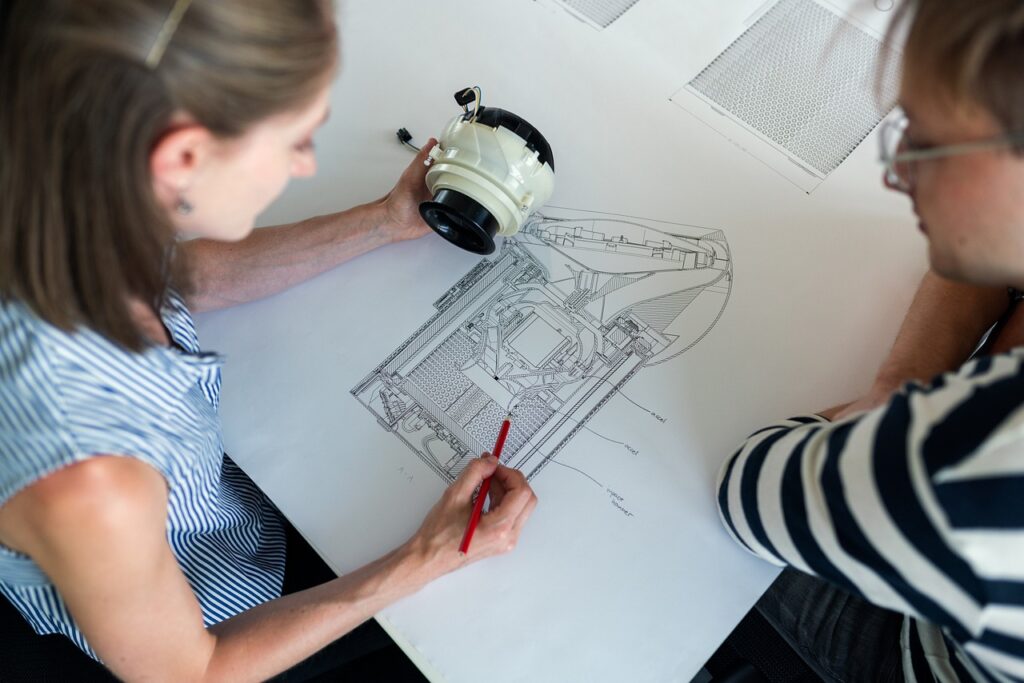
Image source: https://pixabay.com/photos/engineer-noise-and-vibration-engineer-4927716/
The struggle is real (and totally normal)
If you’ve ever stared at a blinking cursor trying to write a presentation, a pitch deck, or even a simple thank-you speech, you’re not alone. Most people can say what they mean when talking, but freeze when asked to write it down.
We overthink tone. We second-guess phrasing. We try to sound smart instead of human. And after a while, it’s not just the writing that drains us—it’s the indecision.
That’s where technology quietly steps in. Not to “replace creativity,” but to support it. A speech writer ai can take your half-baked ideas and turn them into structured, natural sentences. It doesn’t just spit out buzzwords; it reflects what you mean to say—just cleaner, tighter, and easier to deliver.
What a speech writer AI actually does
Let me explain without the hype. A speech writer ai isn’t a magic wand. It’s more like a co-writer who organizes your thoughts before you speak. Here’s what that looks like in practice:
- It listens (figuratively) to your prompts or rough notes and creates an outline with pacing and tone.
- It helps trim filler words, rearrange sections, and tighten the story arc.
- It can simulate your voice—formal or casual—so you stay consistent across keynotes, emails, or scripts.
- It keeps a pulse on structure: hook, context, proof, emotional beat, conclusion.
You still lead the story. The AI just helps carry the weight.
Honestly, it feels a bit like working with a really attentive intern who can read your mind but doesn’t argue when you rewrite half of it.
Why tech people love it (and creatives secretly do too)
Here’s the thing: people in tech are famously allergic to fluff. They prefer clarity, brevity, signal over noise. That’s exactly what this kind of tool provides—a way to turn sprawling notes into sharp narratives without losing meaning.
But even creative professionals—writers, designers, marketers—use it to break through blocks. Not to cheat, but to accelerate the messy middle. The AI doesn’t hand you final drafts. It hands you a place to start.
You know that first ugly draft you hate writing? It writes that part for you. Then you come in and make it real.
From burnout to better flow
Here’s a small confession: preparation burnout is real. Especially when you juggle meetings, slides, and scripts all at once. You can’t pour energy into delivery if you’ve spent every drop trying to plan what to say.
That’s why automation in speech writing isn’t about laziness—it’s about bandwidth.
Think of it like meal prepping. The hard work happens up front, so when it’s time to perform, you’re fresh. You’re present. You’re actually in the conversation.
And since speech writer AI tools often offer templates for tone or audience type (like investor updates or conference talks), you can jump straight into substance. You’ll still tweak for emotion and timing, but the skeleton—the rhythm of it—is already there.
Does it still sound like you?
That’s the main fear, right? That AI-generated words will sound robotic or impersonal. But when used right, it doesn’t replace your voice—it reveals it.
Here’s how you keep your sound intact:
- Feed it your phrases. Include idioms, jokes, or signature lines you always use.
- Edit aloud. Read what it wrote and adjust until it flows naturally in speech.
- Inject your quirks. A pause. A half sentence. Even a tangent that loops back. Those small imperfections make it human.
The truth is, authenticity isn’t about writing every word yourself. It’s about being recognizable when you speak.
A short detour: the human touch
You know what’s funny? The more AI tools we get, the more we crave real connection. It’s like tech keeps reminding us what “human” actually means.
When I first used a writing assistant, I was skeptical. I thought it would sound cold. But then it suggested a phrasing that made my message click—not because it was clever, but because it was simple.
That’s when I realized: simplicity is what most of us forget to chase. We overcomplicate. We over-explain. The AI didn’t replace me—it refocused me.

Image source: https://www.pexels.com/photo/man-in-brown-jacket-standing-beside-woman-in-white-long-sleeve-button-up-shirt-7654002/
How to use a speech writer AI without losing your edge
Here’s a quick rhythm that works for most people:
- Start messy. Dump thoughts without censoring.
- Ask the AI to structure it. Just the bones, not the skin.
- Rewrite emotionally. Add tone, pauses, metaphors, warmth.
- Test it live. Say it out loud. You’ll hear what’s missing.
- Refine for timing. Most great speeches sound conversational, not perfect.
It’s that back-and-forth—your instincts + its structure—that creates magic.
And remember, it’s a collaboration. You’re not outsourcing creativity; you’re accelerating clarity.
Where it really shines
Not every communication moment deserves hours of prep. But the important ones—funding pitches, product reveals, farewell notes, interviews—benefit from polish.
That’s where a speech writer AI helps you most: when stakes are high and time is low.
It keeps your tone steady across slides and scripts. It ensures your logic flows, your metaphors land, your story feels human. And because it’s trained to recognize structure, it quietly keeps your ideas from wandering too far.
You get more headspace to focus on delivery—the hand gestures, the pauses, the connection with your listeners.
The gentle art of editing AI output
Let’s be honest: AI writing tools sometimes go too neat. Too linear. Too polite.
That’s where you come in. Add rhythm. Add interruption. Maybe even let a sentence trail off.
Real speech has texture—little moments of hesitation, phrasing that doesn’t quite match grammar rules. Keep those. They’re part of your fingerprint.
If it feels too clean, mess it up just a little.
Real examples, real benefits
One of my clients, a product manager, used to dread all-hands meetings. She’d ramble through updates and rush the ending. Once she started using a writing assistant to structure her outline, something changed.
She’d feed it bullet points, tweak the tone, and rehearse shorter sections. Within a few months, people started quoting her phrasing. Her ideas stuck—not because she suddenly got better at speaking, but because her prep got smarter.
That’s the quiet revolution happening now. Not automation of speech, but amplification of clarity.
Quick checklist before you present
Before you walk into that meeting or hit record, ask yourself:
- Does this sound like me on a good day?
- Can I explain this without looking at notes?
- Are my transitions smooth enough to feel natural?
- Is there one sentence people will remember?
If you can say yes to most of those, you’re ready.
So, what’s the catch?
The only real trap is overreliance. If you start letting the AI write for you instead of with you, you’ll lose that emotional edge.
Use it as a mirror, not a mask.
Because no matter how fast tech gets, empathy is still what moves people. A machine can polish rhythm, but only you can mean what you say.
Final thought: preparation doesn’t have to be painful
Writing a speech or presentation shouldn’t feel like pulling teeth. It should feel like sculpting—messy at first, then satisfying as the shape appears.
A speech writer AI just helps you find that shape sooner. It takes your raw clay and helps you see the form hiding inside.
So next time someone says, “Tell me about yourself,” don’t freeze. Smile. You’ve got your story ready. And it actually sounds like you.