Table of Contents
In early 2025, a landmark initiative for UK airports facial recognition launched, expanding the technology across 14 major airports like Heathrow and Gatwick. It aims to transform border control with faster, secure, and contactless processing via automated biometric lanes.
Background: The Evolution of Biometric Security at UK Airports
The evolution of UK airports facial recognition traces its roots back to earlier trials. Heathrow began testing comprehensive biometric systems as early as 2018, followed by Gatwick’s implementation of self-boarding gates and facial recognition at boarding in partnership with airlines like EasyJet.
These initial tests paved the way for broader adoption, with Gatwick reporting that over 90% of passengers found the technology easy to use and effective in reducing queue times. Following these positive results—and subsequent national trials including a notable passport-free clearance test at Manchester Airport detailed in a report by The Economic Times—Heathrow embarked on a £50 million project aimed at deploying biometric-enabled bag drops, self-boarding gates, and integrated e-gates throughout the airport.
How UK Airports Facial Recognition Works
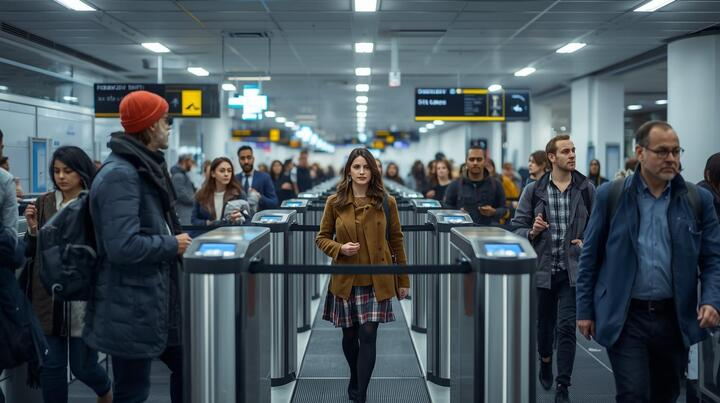
The latest rollout of facial recognition security lanes leverages advanced cameras and biometric software to match passengers’ faces against passport photos held in government databases. Linked with the UK’s new Electronic Travel Authorisation (ETA) scheme, the system requires foreign travellers to submit biometric details via a dedicated app before arrival. Once at the airport, travellers approach automated gates equipped with facial recognition cameras. For British citizens, the new system allows them to pass through immigration seamlessly, without presenting any physical documents—their identity is verified in real-time by matching their facial features to official records.
For those arriving in the UK, the process becomes nearly frictionless. Passengers with biometric passports simply walk through unmanned e-gates, which automatically scan and verify their faces. The technology isn’t limited to air travel; recent trials even experimented with drive-through passport checks where high-powered cameras could scan faces through car windshields—cutting down on queue times at ports and rail terminals as well.
Benefits: Speed, Security, and Passenger Experience
The benefits of UK airports facial recognition are significant, most notably the reduction in wait times at border control, historically a source of frustration for travellers, especially during peak travel periods. By automating verification and eliminating manual passport checks, airports expect to process thousands more passengers per hour, easing congestion and enhancing the overall travel experience. British Airways and other airlines report that biometric lanes now allow boarding up to 240 passengers in ten minutes, an efficiency leap that has impressed stakeholders globally.
Beyond speed, these systems have robust security advantages. Integrating with national security databases, facial recognition technology can instantly flag individuals who pose a risk or have a history of non-compliance with immigration laws. Officials stress that this creates a stronger, more intelligent border without sacrificing the convenience travellers demand.
Privacy, Security Concerns, and the Path Ahead
While the expansion is celebrated for its operational efficiency, concerns do remain. Privacy campaigners warn that storing biometric data introduces new risks, such as unauthorised access or misuse. Airport authorities and the UK Home Office assure travellers that strict data protection protocols are in place, and that biometric data is only stored and used for border security.
As the UK seeks to match standards set by hubs in Dubai and Australia, trials are closely monitored by both the public and government agencies. Feedback mechanisms remain active, giving travellers an outlet to express concerns and experiences as the technology becomes more widespread.
Conclusion: The Future of Air Travel in the UK
The move towards facial recognition security lanes marks a pivotal shift in how airports manage border control. By coupling cutting-edge technology with continuous feedback and strong privacy safeguards, UK airports are poised to deliver a travel experience that is not only faster but also more secure and responsive to traveller needs.
As trials progress and eventual full deployment draws near, the UK’s border management could become an international benchmark for modernisation, efficiency, and digital transformation in the air travel sector.