Table of Contents
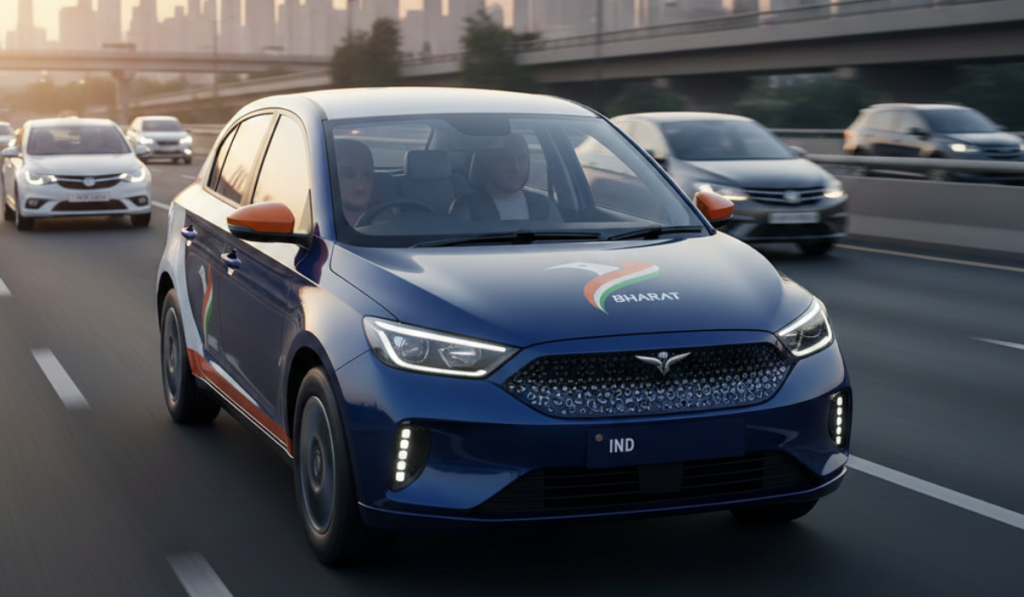
Government-backed Bharat Taxi is rapidly emerging as one of India’s most closely watched mobility innovations, adding up to 45,000 users a day ahead of a full-fledged nationwide launch. This explosive early traction signals growing demand for a homegrown, cooperative-based alternative to existing ride-hailing giants like Ola and Uber.
What is Bharat Taxi?
Bharat Taxi is a government-backed, cooperative-based ride-hailing platform supported by the Ministry of Cooperation and operated by Sahkar Taxi Cooperative Ltd. Designed as part of the broader Atmanirbhar Bharat and “Sahkar Se Samriddhi” vision, the service aims to give drivers ownership and better earnings while offering users a safe, transparent, and reliable taxi option.
Unlike traditional aggregator models, It positions itself as a driver-centric platform where the cooperative, not a private corporation, controls the ecosystem. This structure is intended to reduce dependence on global tech companies and build a sustainable, India-first mobility network.
User Growth and Nationwide Launch
Since its initial rollout in late 2025, Bharat Taxi has already crossed 4 lakh registered customers, with daily registrations touching the 40,000–45,000 mark. The Ministry of Cooperation has highlighted these numbers publicly, describing the current phase as a build-up to a major nationwide launch.
The app is currently live on both Android and iOS and has quickly climbed app store rankings, featuring in the top charts for travel and local services. With operations beginning in key markets like Delhi-NCR and select pilot cities, a broader expansion to more metros and tier-2 cities is expected by the end of January 2026.
This upcoming launch is being framed as a significant milestone for India’s digital public infrastructure, extending the cooperative model into urban mobility at national scale.
Key Features and User Experience
From a passenger’s perspective, It offers a familiar yet streamlined ride-booking experience, covering local, outstation, one-way, round-trip, and rental rides. The app features real-time tracking, multiple cab categories (from hatchbacks to SUVs and tempo travellers), and flexible rental packages for business and leisure travel.
The interface has been designed to be clean and easy to navigate, with multilingual support catering to users across different regions of India. Payment options include cash, cards, UPI, and wallets, aligning with India’s rapidly growing digital payments ecosystem.
Driver-First, Zero-Commission Model
One of the strongest differentiators for Bharat Taxi is its zero-commission promise at launch. Unlike traditional aggregators that charge significant commissions on every ride, It allows drivers to retain the full fare initially, with any future nominal charges expected to be redistributed through the cooperative.
This driver-owned model is designed to improve driver earnings, reduce platform dependency, and create a more equitable ride-hailing ecosystem. The cooperative structure also ensures that strategic decisions, profit distribution, and long-term vision remain aligned with the interests of drivers and local stakeholders.
Safety, Partnerships, and Ecosystem Integration
Safety is a core pillar of it’s value proposition, with police-verified drivers and an in-app distress alert that connects directly to the local police control room. This integration with Delhi Police and other state agencies strengthens trust for both riders and drivers, especially in large urban centres.
Beyond standard taxi services, IT is integrating with public transport networks to improve last-mile connectivity. Through partnerships with Delhi Metro Rail Corporation (DMRC) and Delhi Transport Corporation (DTC), users can use the app to complement metro and bus travel, including purchasing metro tickets in select corridors
SEO Perspective: Why Bharat Taxi Matters Now
From an SEO standpoint, “Bharat Taxi” is rapidly becoming a high-intent keyword cluster in India’s mobility and travel segment. Search interest is likely to surge around terms such as “Bharat Taxi app download,” “Bharat Taxi vs Ola,” “government-backed taxi app,” and “zero commission taxi service” as the nationwide launch nears.Brands, publishers, and local businesses in travel, tourism, hospitality, and urban services can benefit by creating content that aligns with these emerging search queries and user needs. Positioning early around Bharat Taxi-related topics can help capture organic visibility as the platform scales across India in 2026 and beyond.
Bharat Taxi vs Ola and Uber: Price Comparison and Key Differences
It’s zero-commission model and fixed fares make it 20-30% cheaper during peak hours compared to Ola and Uber’s surge pricing. In Delhi tests, a Noida to Aerocity ride cost Rs 510 on Bharat Taxi versus Rs 452-477 on Ola Mini, though Uber Go was slightly lower at Rs 409. The cooperative structure gives drivers 100% initial earnings versus 20-30% commissions elsewhere, positioning it as a driver-first disruptor.
Bharat Taxi’s Safety Features and Police Integration
Unlike Ola or Uber, Bharat Taxi integrates directly with Delhi Police for emergency alerts and verified drivers, enhancing trust in urban rides. Real-time tracking and 24/7 support add layers of security absent in many competitors.
How Bharat Taxi’s Cooperative Model Empowers Drivers
Drivers buy shares to become stakeholders, paying a flat Rs 30 daily fee instead of per-ride commissions, retaining nearly full earnings. Backed by Amul and NABARD, it frees gig workers from private platform dependency.
Bharat Taxi Fare Structure: Transparent Pricing Explained
Minimum fare is Rs 30 for 4 km, Rs 23/km up to 12 km, and Rs 18/km beyond, with no surge pricing—ideal for predictable budgeting. This contrasts with Ola/Uber’s dynamic rates that spike during demand.
Bharat Taxi Expansion Plans: From Delhi to Pan-India Rollout
After pilots in Delhi-NCR and Gujarat, expect Mumbai, Pune, and tier-2 cities by mid-2026, integrating with metro and buses for last-mile connectivity.
Is Bharat Taxi the Future of Ride-Hailing in India?
With 4 lakh+ users and 45,000 daily sign-ups, its government support and equitable model could reshape the Rs 5 lakh crore market.