Table of Contents
In an exciting move toward democratizing AI development, Google Labs has unveiled Opal, an experimental new platform designed to help users build and share AI-powered mini-applications without writing a single line of code. Now available in public beta for U.S. users, Opal empowers individuals and teams to rapidly prototype, test, and share their ideas using a combination of natural language commands and visual editing tools.
What is Opal?
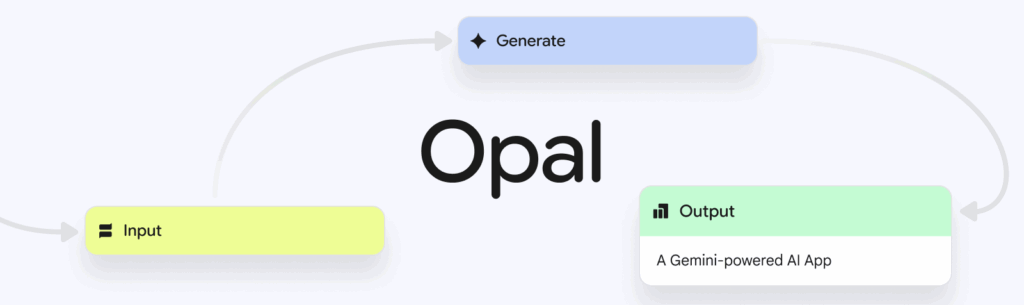
Opal is a user-friendly tool that transforms the way we create with AI. By allowing users to chain together prompts, AI models, and tools, It turns simple instructions into functional, interactive AI mini apps. Whether you’re building an internal productivity tool, showcasing a proof of concept, or just experimenting with ideas, It offers a flexible and accessible platform to bring your vision to life.
Why Opal Matters
Traditionally, building AI applications has required programming knowledge and familiarity with APIs, model architectures, and deployment frameworks. This mini app removes those barriers by offering a no-code environment where users can:
- Build AI workflows through visual sequences
- Edit and customise using simple language or a drag-and-drop interface
- Share ready-made apps for others to use via their Google accounts
This approach opens the doors for creators, entrepreneurs, and professionals who want to harness AI without having to become engineers.
Key Features of Opal
- Visual Workflow Creation
This mini app allows users to design workflows—multi-step processes that link together AI prompts, tools, and logic. Just describe the task, and this translates your instructions into a visual map of actions. This makes it easy to conceptualise and adjust complex app behaviour. - Natural Language Editing
Want to make a change? Simply describe what you want to adjust. Whether it’s tweaking a prompt, adding a new step, or calling a tool, it lets you make edits using conversational language or a visual editor—whichever suits your style. - Easy Sharing and Collaboration
Once your app is ready, you can share it with others, who can then use it directly through their Google account. This makes collaboration and deployment seamless, especially for teams or communities working on similar goals. - Starter Templates and Demo Gallery
To help new users get started, this tool includes a gallery of templates and example projects. These pre-built apps can be used as-is or customised to fit your specific needs, making it easy to learn and build at the same time.
Vacuity and Access
Presently, this platfrom is available in public beta to people in the United States. Google Labs encourages early adopters and builders to explore the tool and give feedback. This cooperative approach is intended to shape the product in its early stages, grounded in real-world operation.
Conclusion
Opal represents a significant step toward making AI development more inclusive and accessible. By lowering the specialised hedge and offering intuitive tools, Google aims to empower a new generation of generators from startups and preceptors to everyday originators. As Google’s AI continues to reshape diligence and workflows, tools like Opal could be crucial to unleashing broader participation in the AI revolution.
With easy integration, user-friendly design, and powerful capabilities, Opal enables experimentation without steep learning curves. Whether you’re building prototypes, exploring creative projects, or developing full-scale solutions, Opal provides the flexibility, guidance, and resources to help you move from concept to reality. However, This offers the perfect place to start if you are ready to turn your ideas into action. This makes AI development more inclusive by removing steep barriers and providing intuitive tools. It empowers startups, educators, and everyday creators to turn concepts into real solutions. With its flexibility and guidance, Opal is the ideal starting point for anyone ready to join the AI revolution.